Podcasting has always been an intimate medium. A voice, a perspective, a conversation that unfolds over time. Long-form content, especially episodes running 15 minutes or more, allows for depth that short-form media rarely achieves.
Yet the industry has shifted toward video-first distribution. Platforms reward visual engagement. Audiences increasingly expect something to watch, not just listen to.
For many hosts, that expectation creates friction.
Some are naturally private and prefer not to appear on camera. Others face the logistical lift of video production: studio rentals, lighting, camera crews, post-production editing, scheduling, reshoots. Long-form video multiplies these complexities.
Synthetic Reality offers a different path.
What Synthetic Reality Means for Podcasts
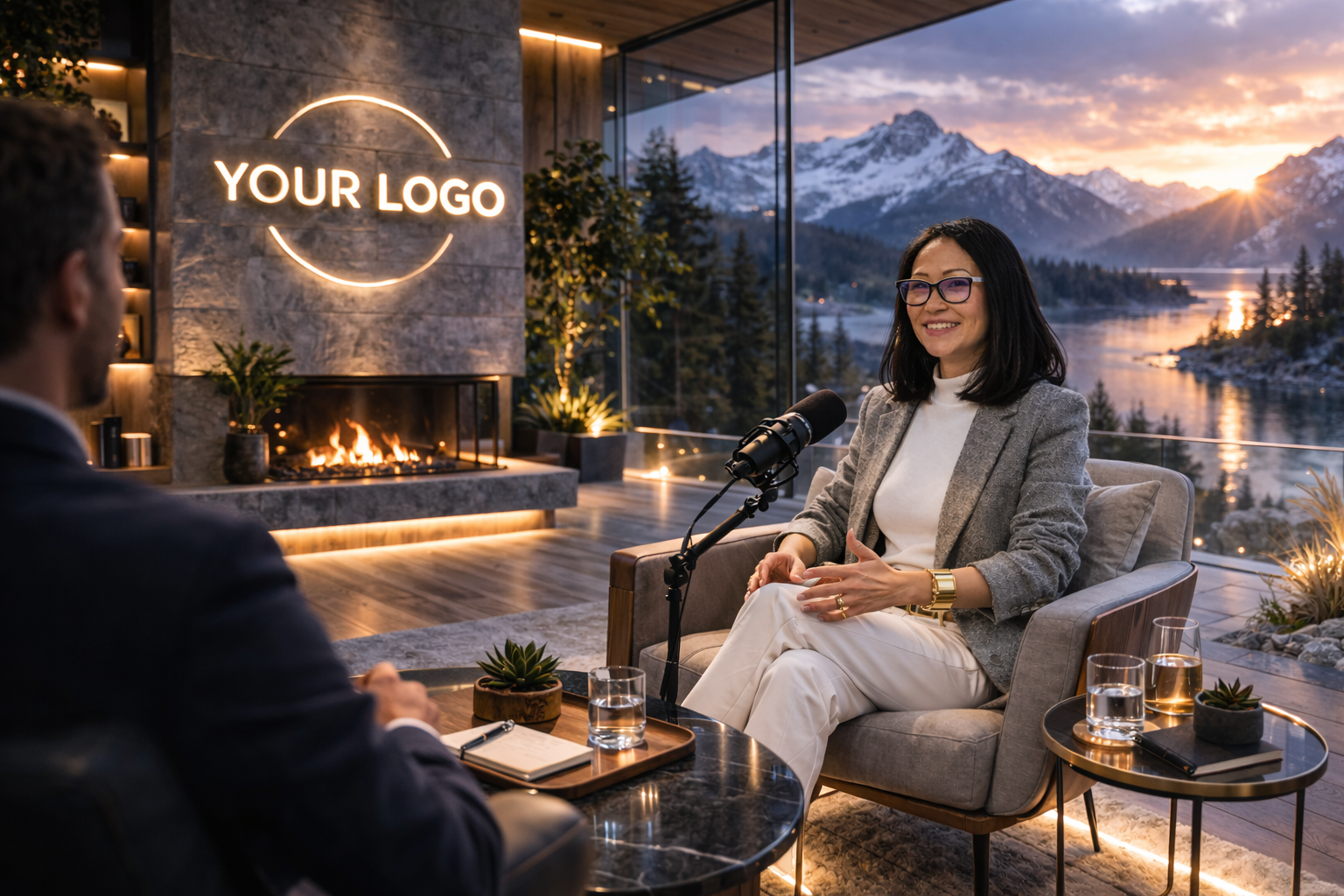
Synthetic Reality (SR) allows audio podcasts to be transformed into fully visual productions without requiring a traditional camera shoot. The original audio file becomes the performance foundation. From there, a hyper-realistic avatar is created and lip-synced to that audio.
The goal is not stylized animation. It is high-fidelity digital presence.
SR studios typically aim for strong likeness alignment, often targeting approximately 90% resemblance to the host. The intent is recognizability without entering uncanny territory. Facial micro-movements, eye behavior, and subtle posture cues are tuned to preserve authenticity.
The result is a visual representation of the voice that already exists.
Long-Form Is the Real Technical Challenge
Short clips are one thing. Sustaining visual coherence for 15, 30, or 60 minutes is another.
Long-form Synthetic Reality production requires continuity systems across:
- Facial stability across extended dialogue
- Consistent lighting behavior
- Camera language that supports conversation rather than distracts
- Environmental stability across scene duration
- Natural lip-sync alignment with pacing variations
Most generative video models were originally optimized for short bursts of content. Long-form requires orchestration.
This is where an SR studio plays a critical role.
The Role of a Synthetic Reality Studio
An SR studio operates at the intersection of storytelling, generative modeling, and production systems.
For podcasters, this means:
- Translating a show’s tone into a visual language
- Designing avatars that reflect personality and brand
- Selecting and orchestrating across multiple video language models
- Managing retakes and iteration cycles
- Preserving narrative pacing across a full episode
- Integrating logo, brand identity, and environment in a cohesive way
Behind the scenes, various video generation systems are evaluated and layered. Each model has strengths: some handle facial detail better, others maintain background consistency, others excel in lighting realism or camera motion. An SR studio determines how to use these tools in combination rather than relying on a single output stream.
The work is less about prompting and more about directing systems.
What to Expect in the Workflow
Working with an SR studio typically follows a structured process:
- Audio ingestion and pacing analysis
- Avatar modeling and likeness calibration
- Environment design aligned to brand tone
- Video model selection and test renders
- Lip sync alignment and facial refinement
- Long-form continuity passes
- Editorial polish and platform optimization
Iteration is part of the process. Generative video is not deterministic in the same way as traditional rendering. Outputs are refined, adjusted, and sometimes regenerated to maintain consistency.
The goal is stability across time, not just a visually impressive frame.
Creative Pathways That Were Previously Closed
For hosts who prefer privacy, Synthetic Reality allows participation without physical on-camera presence.
For creators who want to experiment with visual storytelling but lack production infrastructure, SR lowers the barrier.
For brands and thought leaders, environments can shift from minimalist studios to architectural landmarks to imagined worlds without physical build-outs.
Most importantly, long-form storytelling remains intact. The conversation does not need to be shortened to fit production constraints.
The Broader Shift
Synthetic Reality does not replace podcasting. It extends it.
Audio remains the core. The voice remains authentic. What changes is the container.
As video-first platforms continue to dominate distribution, Synthetic Reality provides a bridge between pure audio and full-scale video production. It creates a visual layer that can be controlled, refined, and iterated in ways that traditional filming cannot.
For podcasters willing to explore it, the question is no longer whether video is required.
It is how that video is built.
And increasingly, the answer is: synthetically, but intentionally. 🎙️
.png?width=2000&height=471&name=SR%20(3).png)
 Nolie MacDonald
 Nolie MacDonald : May 7, 2026, 11:24:20 PM

 Nerdle